
Projects
Cultivating Sustainability Through Knowledge: ICTC’s Urban Forest Success Story in Alexandria
Community Development Initiatives
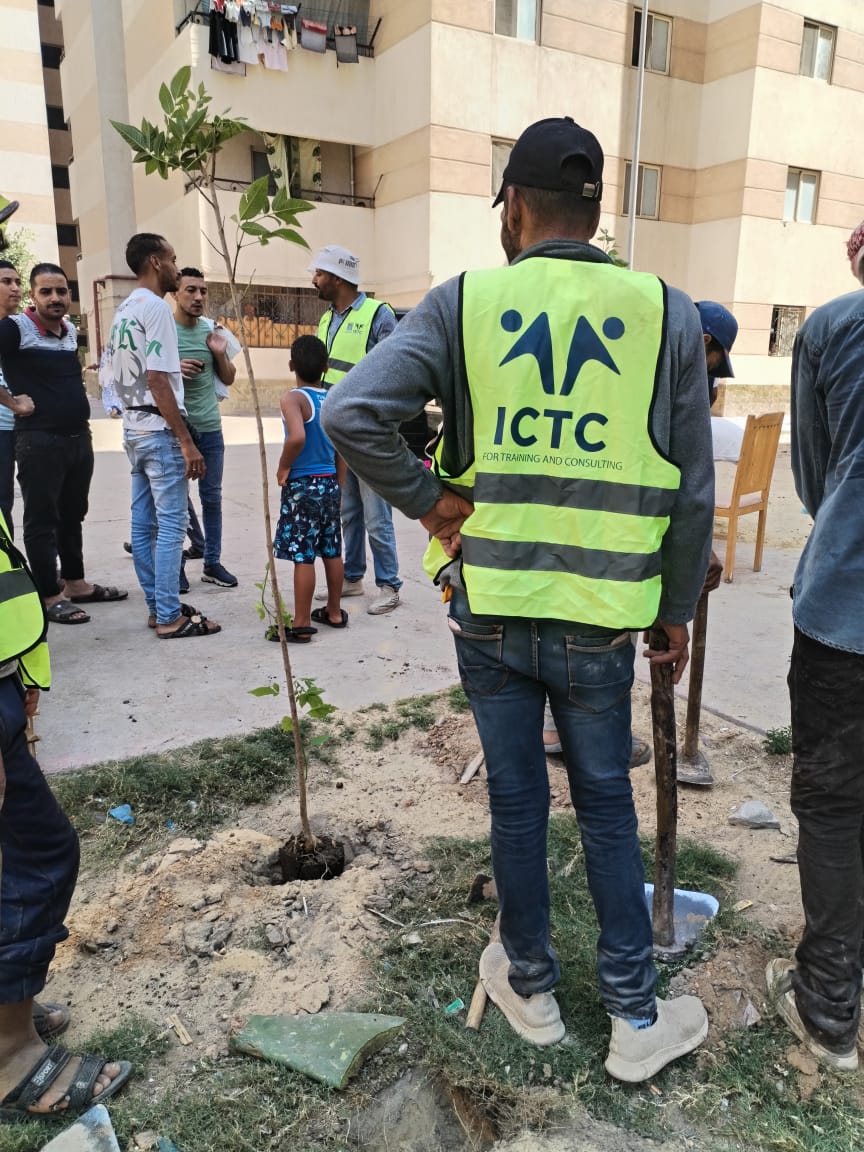
We do not merely implement projects — we
cultivate impact that grows over time.
At ICTC, as a leading Egyptian company
specializing in development project management, we are proud to have led the
on-the-ground implementation of the “Read Marathon 2025” initiative
through a fruitful strategic partnership with a prestigious cultural
institution of the stature of the Bibliotheca Alexandrina.
The Idea: When Knowledge Becomes a Green
Footprint
The “Read Marathon” is not just a
cultural initiative; it is a bridge connecting intellectual development with
environmental sustainability. The concept is simple yet profound: for every 100
pages read by participants, a new tree is planted.
While the Bibliotheca Alexandrina
documented readers’ enthusiasm, ICTC assumed responsibility for
transforming this intellectual effort into tangible environmental action that
extends through the lifelines of Alexandria.
Our Executive Role: A Commitment Beyond
Expectations
At ICTC, our role extended far beyond
supervision. We managed the entire project lifecycle—from scientific
planning and selecting tree species best suited to the coastal environment, to
their strategic distribution across key urban corridors, and finally ensuring
the highest standards of execution quality.
Results in Numbers
The initial target was to plant 10,779 trees,
based on the total number of pages read.
However, because at ICTC we firmly believe in over-delivering,
we successfully planted 10,788 trees, while also upgrading the required
specifications. Trees were supplied at heights ranging between 2 to 5 meters
(instead of 1.5 meters), significantly enhancing both the visual and
environmental impact from day one and accelerating their integration into the
ecosystem.
Overcoming Challenges: ICTC’s Methodology for
Turning Obstacles into Success
Managing projects on the ground requires
flexibility and innovative solutions. Here is how we addressed field
challenges:
Challenge 1: Hard Soil and Water Shortage
(Mahmoudia Axis)
Solution: Rapid intervention through the provision of specialized excavation
equipment for difficult soil conditions, along with high-level logistical
coordination with the Governorate Headquarters to supply daily mobile water
tankers.
Impact: Achieved a 100% tree survival and sustainability rate, an
exceptional outcome under such conditions.
Challenge 2: Harsh Climate Conditions (July
Heat and Alexandria Storm)
Solution: Application of professional planting techniques, including deep
excavation (up to one meter) and precision planting methods.
Impact: All trees withstood climate fluctuations and storms,
demonstrating the strength of proactive planning.
Integrating the Local Community
Community Engagement in High-Density Areas
(Bashayer El-Khair 3–5)
As community development experts, we did more
than plant trees—we fostered a sense of community ownership.
After planting the first 200 trees, the
initiative evolved into a collaborative community effort, with children, youth,
and parents actively participating in planting and daily irrigation.
Impact: Initial concerns transformed into growing demand. An additional 4,900
trees were planted in the area, while the local community was prepared to
accommodate more than 30,000 trees in the future.
These efforts also culminated in the inclusion of persons with disabilities
in planting activities, adding a strong humanitarian and inclusive dimension to
the project.
Environmental Impact Map (Where Did We Plant?)
We implemented a precise and carefully planned
distribution strategy using resilient species—Ficus, Tecoma, Duranta, and
Brazilian Pepper—across Alexandria’s districts to maximize environmental
benefits:
- East District (2,566
trees): Mahmoudia Axis,
Governorate surroundings, Smouha entrance, and Airport Road.
- Bashayer El-Khair 3–5
(4,877 trees): A large
diversity of Tecoma, Duranta, and Brazilian Pepper trees.
- West and Agamy Districts
(1,645 trees): El-Mex,
El-Bitash, and Qabari roads.
- Other Districts (1,700
trees): Central District,
Montaza 1 & 2, and the surroundings of Borg El-Arab Stadium in Amreya.
Partners in Success
This achievement is the result of a strategic
collaboration we proudly value with our partners:
- Bibliotheca Alexandrina
- Alexandria Governorate
Headquarters
- Net Zero Initiative, funded by Al-Isra Global
Through this collective effort, we demonstrated
that integrating cultural awareness with precise environmental action
creates a better reality.
At ICTC, we reaffirm our ongoing commitment to
leveraging our expertise in development project management to deliver
sustainable solutions that create meaningful impact in our communities.
Together, We Can Cultivate Sustainable Impact
Everywhere
Discover how ICTC can facilitate and
manage your community initiatives.
Explore our consulting and implementation services.