
Projects
Measuring Impact to Drive Change: Designing and Implementing a Comprehensive Evaluation System to Empower 240 Children and Their Families in Partnership with Misr El-Mahrousa Balady
Institutional Development
“In the development sector, real impact is not
measured by what we do, but by what changes in the lives of beneficiaries. We
are here to make that change visible, documented, and ready to be built upon.”
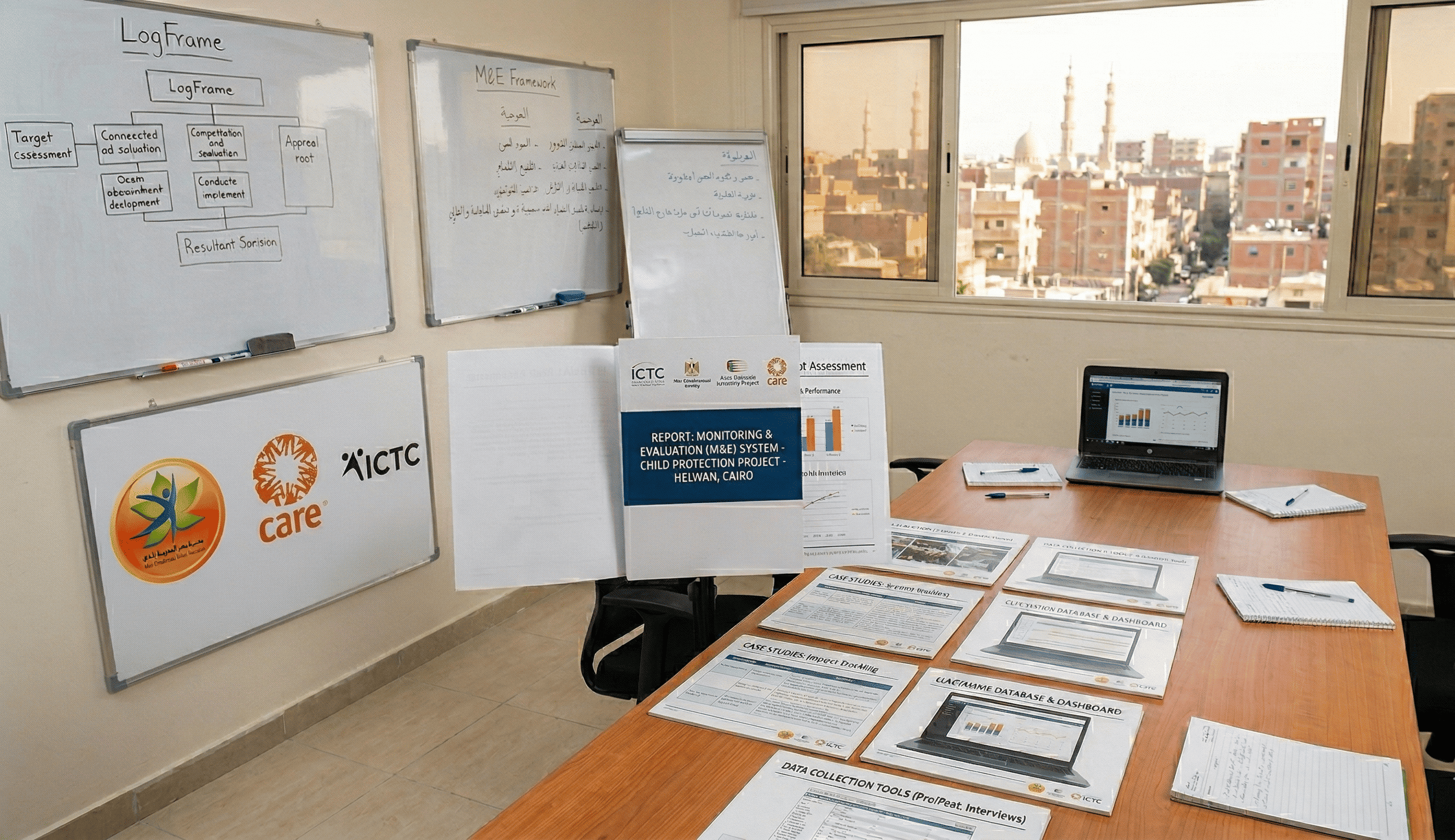
ICTC is proud to have designed and implemented a comprehensive Monitoring
and Evaluation (M&E) System for the project “Protecting Children at
Risk in Helwan District.”
This integrated development project aims to
reduce vulnerabilities among 240 children (aged 8–15) and 120 mothers
in Maasara, funded by the Italian-Egyptian Debt for Development Swap
Program, in partnership with Misr El Mahrousa Balady Association and
CARE International.
The Challenge: From Data Collection to Impact
Measurement
Misr El Mahrousa Balady Association already had strong access to the target
community, an initial database, and approved methodologies for measuring
intelligences. However, the key challenge for donors remained:
How can we scientifically and sustainably track
measurable improvements in the lives of these children and their mothers?
At this stage, ICTC stepped in to design a
Monitoring and Evaluation system that goes beyond observation—ensuring
implementation efficiency while providing replicable tools that can be
applied to future projects.
ICTC Methodology: A Comprehensive 360-Degree
Framework
To achieve the project’s objectives—improving
health behaviors, increasing academic performance by 80%, and strengthening
self-confidence and creativity—ICTC developed a dynamic system built on two
integrated tracks:
Evaluation System
Designed to clearly measure intervention impact
through Pre- and Post-Assessments, enabling measurable comparisons in
beneficiaries’ progress.
Monitoring System
Established to conduct continuous tracking of
activities and beneficiaries through a unified Case Study system,
ensuring structured documentation and follow-up.
The logical framework designed by ICTC included
four core monitoring pillars:
Health and Behavioral Assessment
Development of tools to measure progress in
addressing malnutrition, conducting general health screenings, and
promoting healthy lifestyle habits among mothers and children.
Psychosocial Assessment
Close monitoring of emotional changes,
reduction in bullying incidents, and improvements in family relationships
through structured counseling sessions.
Academic Tracking
Linking attendance and behavioral data with
schools (or summer programs) to ensure achievement of the target improvement
in academic performance.
Skills and Creativity Assessment
Creation of individual portfolios to
document each child’s creative development and ability to express themselves.
Deliverables That Drive Institutional Impact
ICTC’s role extended beyond providing
documentation templates. We focused on building institutional capacity from
within to ensure sustainability. Our key deliverables included:
Logical Framework Matrix (LogFrame)
A detailed analysis of project objectives,
including the development of quantitative and qualitative Key Performance
Indicators (KPIs).
Smart Electronic Database
An advanced registration system enabling the
generation of customized reports that accurately reflect project
progress and outcomes.
Comprehensive Field Measurement Tools
A full toolkit including:
- Case tracking forms
- Classroom observation forms
- Focus Group Discussion (FGD)
tools
- Home visit reporting
templates
Capacity Building
Intensive training sessions for field teams on professional
use of M&E tools, accurate documentation, and capturing lessons
learned.
The Result: Documented Impact and Full
Transparency
Through this system, project activities were
transformed into a well-documented success story supported by data and
evidence.
ICTC successfully established archived and
detailed case studies for all targeted children, enabling donors and senior
management to access accurate final reports comparing:
- Baseline data
- Post-intervention results
In addition, the system provided strategic
recommendations to guide future interventions and strengthen long-term
project outcomes.
Partners in Success
- Italian-Egyptian Debt for
Development Swap Program
— Funding Partner
- CARE International — Technical Partner
- Misr El Mahrousa Balady
Association —
Implementing Partner
Accurate Data Is the Foundation of Successful
Development Projects
Reliable data is the cornerstone of every
successful development initiative.
Are you preparing to launch your next
development project and looking for experts to design a Monitoring and
Evaluation (M&E) System that aligns with international donor
standards?
Contact ICTC consultants today to ensure
accurate measurement of your project’s impact.